In the world of modern SEO, Schema Markup Validator has become one of the most essential tools for improving your visibility on Google. As search engines continue to focus on delivering rich, interactive, and meaningful results, structured data is now a must-have, especially if you want to stand out from the competition.
Whether you’re an SEO beginner, technical expert, or website owner who wants to improve organic performance, this guide will help you understand what a Schema Markup Validator is, why it matters, and how you can use it to enhance your site’s search appearance.
⭐ What Is a Schema Markup Validator?
A Schema Markup Validator is a tool that checks and verifies your website’s structured data, such as JSON-LD, Microdata, or RDFa. Its job is to ensure the schema code on your website is correctly implemented, error-free, and ready to generate rich results.
Structured data is written in a way that helps Google better understand your webpage content. When Google understands your page, it becomes easier for your site to appear in special search features such as:
Review snippets
FAQ rich results
Breadcrumbs
Product details
How-to instructions
Events
Videos
Recipes
But you only get these benefits if your schema markup is valid, and that’s where a Schema Markup Validator plays a major role.
⭐ Why Is Schema Validation Important for SEO?
✔ 1. Boosts Google Rich Results
Rich results increase your visibility by displaying additional information like ratings, FAQs, images, or product price. Schema validation ensures your structured data is eligible for these enhancements.
✔ 2. Improves Crawlability
Proper schema markup improves how search engines understand your content, helping them index your pages more accurately.
✔ 3. Eliminates Schema Errors
Schema errors can prevent your website from qualifying for rich snippets. A Schema Markup Validator helps you identify and fix issues instantly.
✔ 4. Enhances CTR (Click-Through Rate)
Rich snippets stand out visually and attract more clicks compared to normal blue-link results.
✔ 5. Supports Modern SEO Standards
Structured data is now a major part of technical SEO and should be included in every site audit.
⭐ How Does a Schema Markup Validator Work?
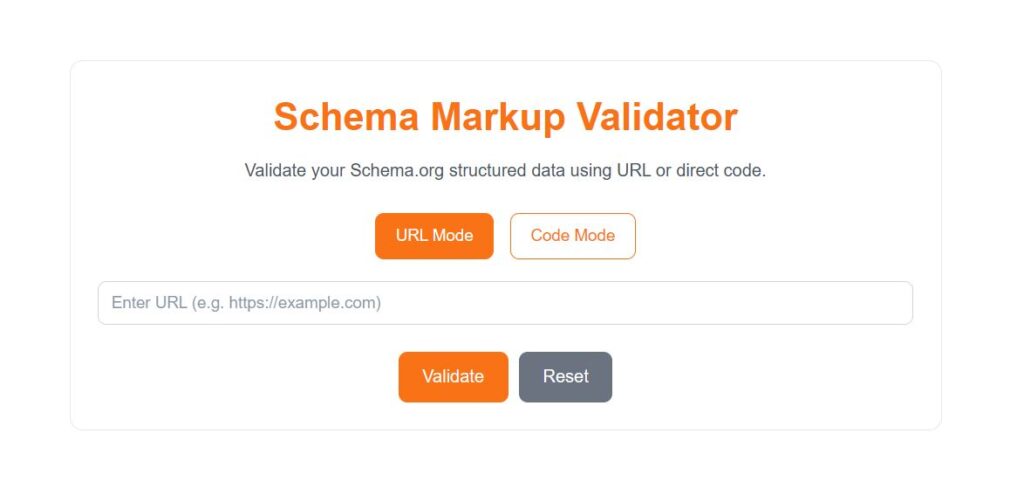
A standard Schema Markup Validator performs three important actions:
✔ (1) Fetches Your URL or Code
You input either:
A live webpage link
OR paste your schema code manually
✔ (2) Scans for Structured Data
It detects any structured data formats including:
JSON-LD (most recommended by Google)
Microdata
RDFa
✔ (3) Shows Errors + Warnings
It displays issues in your schema, such as:
Missing required fields
Invalid field types
Unsupported schema types
Syntax issues
Deprecated properties
It also lists valid structured data items and explains what is eligible for rich results.
⭐ Types of Structured Data You Can Validate
A Schema Markup Validator helps you test many schema types, including:
Product
Article
Breadcrumb
Organization
Local Business
FAQ
How-to
Review
Recipe
Event
Video
If structured data is part of your SEO strategy, validating all these types ensures smooth performance and higher search visibility.
⭐ Benefits of Using a Schema Markup Validator
✔ Ensures Quality Implementation
Even a small mistake in JSON-LD can break your schema. Validators catch errors instantly.
✔ Saves Time for Developers and SEOs
Instead of manually checking long code, the tool highlights issues line-by-line.
✔ Helps You Prioritize Fixes
Errors and warnings are clearly separated so you know what to fix first.
✔ Makes Your Website Eligible for Enhanced Search Results
Validation improves your chances of appearing in features like “Top Stories,” “FAQ Results,” and “Product Rich Snippets.”
✔ Improves User Experience
Rich results provide more information before users even click—improving trust and engagement.
⭐ Common Structured Data Errors (and How Validation Helps)
Here are the most frequent schema errors website owners face:
❌ Missing Required Fields
Example: Product schema missing “name”.
❌ Wrong Data Type
Example: “price” added as text instead of number.
❌ Using Unsupported Schema
Some schema types are not eligible for rich results. Validators warn you.
❌ Outdated Schema Properties
Schema.org updates regularly; old formats may stop working.
❌ Multiple Schema Conflicts
Too many schema types can cause confusion for Google.
A Schema Markup Validator identifies each of these issues, so you can fix them fast.
⭐ Best Practices for Using Schema Markup Validator
Always test your schema before publishing.
Validate your structured data after every site update.
Combine schema with strong on-page SEO (title, headings, structured content).
Avoid unnecessary schema types, use only relevant ones.
Follow Schema.org guidelines for accuracy.
Use JSON-LD format whenever possible (recommended by Google).
Related Posts
- Meta Tag Generator Online – Free SEO Tools
- Free Keyword Density Checker Tool
- Sitemap Creator Online | Free XML Sitemap Generator
FAQs
1. What is a Schema Markup Validator?
A Schema Markup Validator is a tool that checks your website’s structured data, detects errors, and ensures your schema is valid for Google rich results.
2. How do I test my website’s structured data?
You can test your structured data by entering your URL or schema JSON-LD code into a Schema Markup Validator. The tool scans for errors and validates your schema.
3. Why is schema validation important for SEO?
Valid schema markup improves search engine understanding, increases eligibility for rich snippets, and enhances your website’s click-through rate on Google.
4. Which structured data formats can I validate?
You can validate JSON-LD, Microdata, and RDFa formats. JSON-LD is the most recommended format for SEO because it’s easy to implement and Google prefers it.
5. How do I fix schema markup errors?
Use a schema validator to identify issues, then correct missing fields, wrong data types, or unsupported properties based on Schema.org guidelines.
6. Does schema markup improve ranking?
Schema markup doesn’t directly boost rankings, but it improves SERP visibility and CTR through rich results, which indirectly support better SEO performance.
⭐ Final Thoughts
Using a Schema Markup Validator is not optional anymore, it’s essential for any website aiming to rank higher, boost organic visibility, and earn rich results. Proper structured data helps search engines understand your content, improves your SEO performance, and significantly increases your chances of standing out on the SERPs.
If you want more traffic, better CTR, and strong technical SEO, start validating your schema markup today.